

Introduction
When most people think about exercise, they think about getting stronger, fitter or losing weight.
But if you live with a chronic illness or disability, success often looks different.
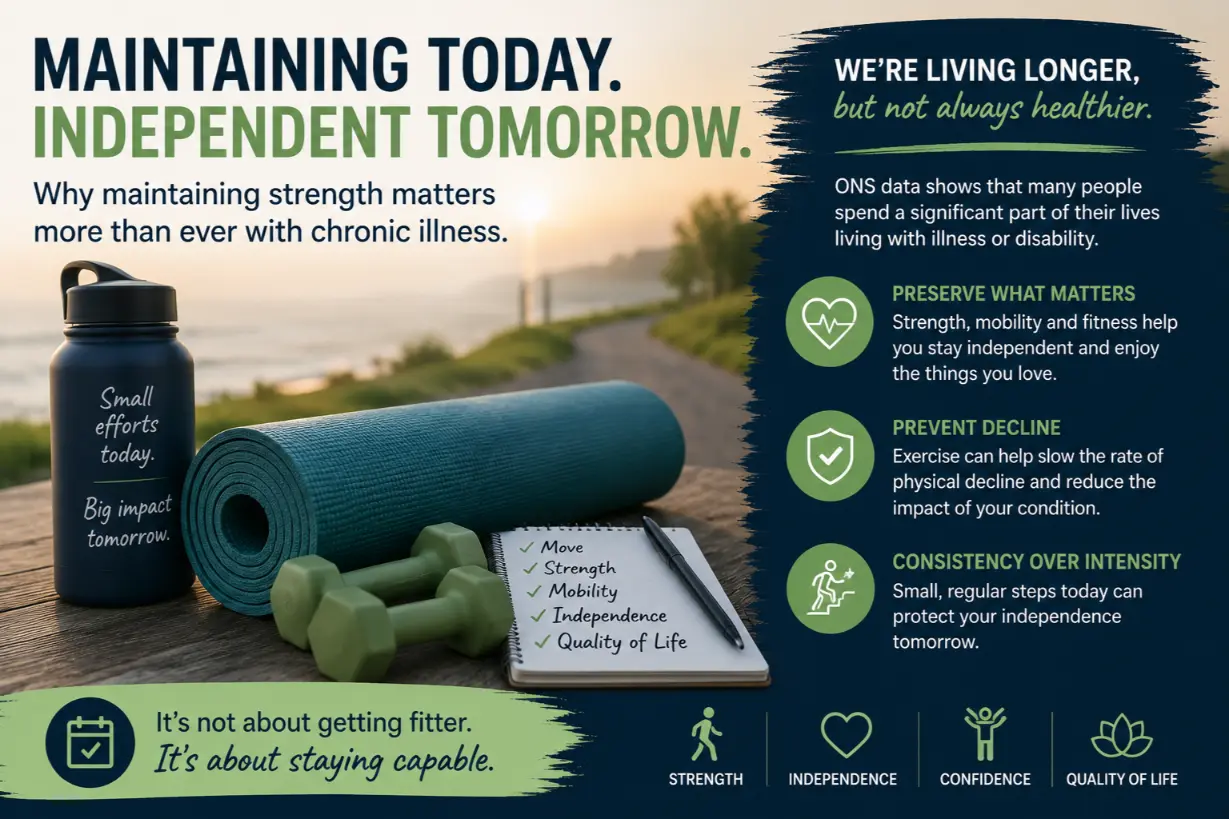
Sometimes the goal isn’t to become fitter than you were last year—it’s to maintain the strength, mobility and independence you already have.
That matters because recent UK health statistics show that although we’re living longer, we’re not necessarily spending those extra years in good health. Many people can expect to live a significant part of their lives managing illness or disability.
For people who already have a chronic condition, protecting what you have today can be one of the most valuable long-term investments you make.
When most people think about exercise, they think about getting stronger, fitter or losing weight.
But if you live with a chronic illness or disability, success often looks different.
Sometimes the goal isn’t to become fitter than you were last year—it’s to maintain the strength, mobility and independence you already have.
That matters because recent UK health statistics show that although we’re living longer, we’re not necessarily spending those extra years in good health. Many people can expect to live a significant part of their lives managing illness or disability.
For people who already have a chronic condition, protecting what you have today can be one of the most valuable long-term investments you make.
Progress Isn’t Always About Getting Better
One of the biggest misconceptions about exercise is that every month should bring noticeable improvements.
For many chronic conditions, that’s unrealistic.
Instead, success might mean:
– Remaining able to walk comfortably
– Keeping enough strength to carry shopping
– Staying independent at home
– Continuing to enjoy hobbies
– Reducing the rate of physical decline
Maintaining these abilities is progress.
For many chronic conditions, that’s unrealistic.
Instead, success might mean:
– Remaining able to walk comfortably
– Keeping enough strength to carry shopping
– Staying independent at home
– Continuing to enjoy hobbies
– Reducing the rate of physical decline
Maintaining these abilities is progress.
Why Muscle Strength Matters
We naturally lose muscle mass and strength as we age.
A chronic illness can accelerate this process because of:
– reduced activity
– fatigue
– pain
– hospital admissions
– long periods of inactivity
Regular resistance training helps maintain the muscle needed for everyday life.
That doesn’t mean lifting heavy weights.
It means keeping your body capable of doing the things that matter to you.
A chronic illness can accelerate this process because of:
– reduced activity
– fatigue
– pain
– hospital admissions
– long periods of inactivity
Regular resistance training helps maintain the muscle needed for everyday life.
That doesn’t mean lifting heavy weights.
It means keeping your body capable of doing the things that matter to you.
Maintaining Fitness Supports Independence
Cardiovascular fitness isn’t just about running.
It’s about having enough endurance to:
– walk around the supermarket
– climb stairs
– play with children/ grandchildren
– enjoy holidays
– complete daily activities without excessive fatigue
Maintaining this capacity can have a huge impact on quality of life.
It’s about having enough endurance to:
– walk around the supermarket
– climb stairs
– play with children/ grandchildren
– enjoy holidays
– complete daily activities without excessive fatigue
Maintaining this capacity can have a huge impact on quality of life.
The Goal Changes
When I work with clients who have chronic illnesses or disabilities, we don’t always chase personal bests.
Sometimes our goals are:
– preventing further decline
– maintaining confidence
– preserving mobility
– adapting exercise around changing symptoms
– staying active consistently
Those are meaningful outcomes.
Sometimes our goals are:
– preventing further decline
– maintaining confidence
– preserving mobility
– adapting exercise around changing symptoms
– staying active consistently
Those are meaningful outcomes.
Small Improvements Still Matter
Even when a condition can’t be cured, exercise can often improve:
– balance
– coordination
– confidence
– functional strength
– mental wellbeing
The combination of small improvements and maintaining existing ability can significantly improve day-to-day life.
– balance
– coordination
– confidence
– functional strength
– mental wellbeing
The combination of small improvements and maintaining existing ability can significantly improve day-to-day life.
A Long-Term Mindset
Think of exercise like saving for retirement.
Small, consistent deposits add up over time.
Missing one session isn’t important.
Giving up completely is.
The people who benefit most are rarely those who train the hardest.
They’re the people who keep showing up.
Small, consistent deposits add up over time.
Missing one session isn’t important.
Giving up completely is.
The people who benefit most are rarely those who train the hardest.
They’re the people who keep showing up.
What This Means for People Living with Chronic Illness
If you’re managing a long-term condition, try changing the question.
Instead of asking:
“How much fitter can I become?”
Ask:
“What abilities do I want to keep over the next 5, 10 or 20 years?”
That shift in thinking often changes everything.
Instead of asking:
“How much fitter can I become?”
Ask:
“What abilities do I want to keep over the next 5, 10 or 20 years?”
That shift in thinking often changes everything.
Conclusion
Living with a chronic illness doesn’t mean giving up on exercise.
It means redefining what success looks like.
For many people, maintaining strength, mobility and independence isn’t “standing still”—it’s one of the greatest achievements possible.
A well-designed exercise programme isn’t just about today’s workout.
It’s about helping future you remain as active, capable and independent as possible.
Living with a chronic illness doesn’t mean giving up on exercise.
It means redefining what success looks like.
For many people, maintaining strength, mobility and independence isn’t “standing still”—it’s one of the greatest achievements possible.
A well-designed exercise programme isn’t just about today’s workout.
It’s about helping future you remain as active, capable and independent as possible.
Frequently Asked Questions- FAQs
Is maintaining fitness enough if I have a chronic illness?
Absolutely. Maintaining your current strength, mobility and independence can be just as valuable as improving them.
Should I still exercise if my condition is progressive?
In many cases, yes. Appropriate exercise may help maintain function and quality of life, but your programme should be adapted to your condition and discussed with your healthcare team where appropriate.
Is strength training safe with chronic illness?
For many people it is, provided it is tailored to your abilities, symptoms and medical advice.
Not sure what the right level of exercise looks like for you?
Every chronic illness and disability affects people differently. If you’d like a personalised approach that works around your symptoms, energy levels and goals, learn more about my adaptive personal training services.
